Saturday, August 13, 2016

Mitophagy and rejuvenation: a possible mechanism


Mitophagy is the destruction of mitochondria within a cell by specialised  ‘garbage disposal’ units called lysosomes. ‘Selective mitophagy’ is the destruction of malfunctioning, defective or simply aged mitochondria.  Selective mitophagy is a hot topic today. As long ago as 1978 in my postgraduate days we demonstrated that in senescent rats a significant subpopulation of  mitochondria were present in aged livers which were not found when similar aged livers were caused to regenerate following partial hepatectomy1.

Since then it has become accepted from multiple studies that old, damaged, usually enlarged mitochondria inhabit senescent cells and are responsible in signalling the multivarious chain reaction of events that precipitate cell death. This process called apoptosis is now regarded as a partial blessing in old age as a clearing out of the redundant burdensome poorly performing cells but I am more interested in the problem of  weeding out the old, poor functioning mitochondria leaving the ‘younger’ to proliferate and predominate? This is, to all intents and purposes, nothing less than rejuvenation … the holy grail of gerontology.


The selection of mitochondria for their ‘fitness’ is not unknown. Small mammals such as rats and mice have typically short life spans ( 2-3yrs in captivity) and we are accustomed to thinking that size matters with regard to mammal longevity: mice, dogs, cats, apes, humans, elephants are roughly in order of mass and lifespan. But how we should  envy the Pigeon; it has a body mass not greater than a rat but a life span of over twenty years... and don’t get me started on Parrots who hold the record at 92 yrs. Pigeons, like most birds have very good mitochondria compared to our own. They produce fewer reactive oxidative species (R.O.S) and basically are just more efficiently coupled2.

However there are flying mammals too; furry flying mice-sized creatures known as bats. You guessed it, they have long life spans ( >10yrs) and yes they have good mitochondria too. They are not born with these bird-like mitochondria though. Before they fly theirs are much as they would be in any small mammal but after they fly it’s a different story. It’s hard not to conclude that there was a selection process for the best going on here3.

We are not likely to be able to subject our systems to the energetic stress of flying in order to weed out the less efficient mitochondria, it would kill us,  but maybe there are other ways?

Recent fascinating work on the urolithins (related to the tannins and other phenolics in red wines)  from pomegranate seeds I think provides not only some clues but also possible mechanism for selective mitophagy. Urolithin A has been shown to extend the life of  the simple nematodes and the mechanism is believed to be the result of selective mitophagy4.  But how?

How do you label a mitochondrion for destruction? Old, degenerating mitochondria have many ways of signalling their approaching end but these apoptotic signals mean the end of the cell too.
We need to label the mitochondria for destruction without tripping the death chain reactions.

In a previous blog ‘Mitochondrial morphology and Ageing.’5, I put forward a long cherished point of view that enlarged senescent mitochondria were that way in order to maintain their threshold membrane potential against a background of reduced e-/H+ throughput, and increased leaks across the membrane. I used an electronics model of the mitochondrion as capacitor with voltage, current, capacitance and leakage as normal parameters. Basically if you reduce surface area (capacitance) you can maintain the threshold voltage (membrane potential) in the face of lower throughput ( current) and back flow due to dielectric leakage.

In other words the old mitochondria are working but don’t push them as they are close to the edge.

With this in mind look at the urolithin molecule from pomegranates:


It’s a poly-phenol as is the molecule below:

This is rotenone, a potent inhibitor of mitochondria,
which prevents electron flow past Complex I.
It is in many ways ( see bottom left rings) very similar to urolithin.

Or may be you prefer your molecules simpler?
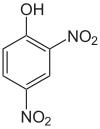
This is DNP (di-nitro phenol) a potent de-coupler of mitochondria.

Both of these molecules are severe toxins. Rotenone is used as a pesticide and scarily  and sometimes fatally DNP can be used by those seeking to lose fat weight!

Rotenone (in my electronics analogue) would decrease the current flow through the capacitor and DNP would increase the leak to ground. In either case a mitochondrial capacitor struggling to maintain its threshold membrane potential would be badly compromised.

Maybe then the signal for mitophagy is the blinking on and off of the threshold membrane potential, a kind of ‘drowning not waving’ signal to the lysosomes that these mitochondria are not up to the job. This kind of mechanism clearly would work well as the young bat took to flying and the less fit mitochondria failed to keep up.

Unlike in the bat where ‘stress’ is extreme energetic demand,  urolithin mediated selection is being achieved by a hormetic mechanism. A ‘little poison does you good’?
I think that this is the most promising of avenues to explore with regard to rejuvenating mitochondrial populations and thereby rejuvenating the organism. Humans cannot regenerate organs as can an old rat its liver, we cannot (when old) survive extreme energetic stress therefore hormesis seems like a good bet. But what is the best hormesis for mitochondrial rejuvenation… now there’s a question.

  1. PhD Thesis: Biochemistry of Ageing in Rat Liver Mitochondria: p 165-170:awarded July 1980: online Jan 2016
  2. Oxygen, The Molecule that made the World: Nick Lane 2002 Oxford University Press pp255-257
  3. Urolithin A induces mitophagy and prolongs lifespan in C. elegans and increases muscle function in rodents, Nature Medicine 22,879–888, (2016)

  4. Ann N Y Acad Sci. 2004 Jun;1019:506-8.Testing the free radical theory of aging in bats. Brunet Rossinni AK

  5. Mitochondrial morphology and Ageing: January 2015 Spannermans Edublog www.spannerman2.co.uk


Wednesday, July 06, 2016

Brexit and Homo.semi-sapiens

I have been meaning to write on this topic for a very long time. As a teacher, a biologist and a computer scientist the process we call reasoning is always to the fore, whether delivering a biology module on ethology, discussing  fuzzy logic and AI or marking scripts and wondering what on earth is passing for ‘reasoning’ in the minds of my students. The recent ‘Brexit’ referendum brought it all together for me … just how does homo-semi-sapiens reason?

Artificial Intelligence or AI has had spectacular gains over the past decade or so. It started with IBM’s ‘Deep-Blue’ defeat of Gary Kasparov at chess in 1996 before retiring in 1997 after winning a controversial rematch. 20 years later Google’s computer beat the current world champion at GO! The latter board game was levels of magnitude less ‘logical’ and predictable than chess and regarded as more intuitive and complex. So much for board games. I struggle to play either so would stand no chance against a computer’s intelligence.

Next up in the real world the BBC recently reported a US AI defence system successfully outplayed incoming attack jet fighters by basically outfighting them with its own interceptors. So much for war then. I am not able to fly a jet, real or virtual, and I know little of strategic war routines having not been trained in the military so I must defer to the computers once again.

The question for me is not how smart is AI and how smart can be the very smartest humans but ‘just how dumb are humans, really?’

If we take our mammal cousins, the field mice, and look at their ‘thinking’ in the context of the life choices they have on rising in the morning. They have very little body mass and so have little  food reserve. They cannot go without food for very long so each day they look for food. But they also need to reproduce for the species to survive and to do this they must look for a mate rather than forage for food. This is risky as they may, find a mate and then starve or fail to find a mate and starve.

How do they make this life and death choice?  Well, very detailed study showed that they use a very simple algorithm which is ‘I ate well yesterday so I can look for a mate today’. That’s it!

This simple algorithmic approach to reasoning is widespread in the animal kingdom and are inferred from observed behaviours. This is why it belongs to the field known as ethology which is the study of animal behaviour. These algorithms are known to the higher primate homo-sapiens and we call them ‘rules of thumb’. Rules of thumb abound today, after all if you want to improve something then measure it.  So here then is building block No1 in human reasoning

Reasoning method Number 2 was explained to me on BBC Radio 4 many years ago when a politician was describing ‘thematic reasoning’ which at the time was new to me and a revelation. Essentially things, issues, people, whatever, are ascribed a virtue, that is ‘good’ or ‘bad’. To whit an often repeated 1990’s experiment is to ask the general public which of the following processes were most responsible for global warming: electricity generated by coal fired stations, oil fired, gas fired or nuclear powered?  Invariably the order was, worst=nuclear, best=gas.

It’s simple to understand their mistake. Global warming = a v bad thing; nuclear power = a bad thing ( this is 1990s post Chernobyl), bad begets bad so the conclusions are linked by theme. Apparently according to my radiophonic mentor all politicians understand this and are taught it at politician school which explains a lot...see referendum debates, invasion of Iraq etc etc.

Finally we have reasoning Number 3. It’s called magic. James George Frazer’s famous book ‘The Golden Bough; a study in magic and religion’ in the late nineteenth century does it for me. To cut a long story short, belief systems developed that introduced new ways of reasoning. They were/are characterised by rituals and symbols and embodied principles. The latter include an association inferring cause and effect, eg the Rooster crows just before sunrise ergo the sun’s rise is caused by the Rooster's crow. This is broadly called sympathetic magic the other main type is contact based and is called contagion. So for example the baptising of a baby with holy water is an example of contagious magic replete with symbolism and iconography.

So far so bad for homo-semi-sapiens. What about higher levels of reason? The kind of thing you get from education.

Take for example conditional statements, ‘if I do this, that will happen’. Every teacher knows by experience that students can have their minds trained so as to make correct conclusions using the conditional so long as they are given the initial knowledge conditions and the rules of the game. This is certainly the start of logical thought and in itself an educational achievement but ask also the same teachers (and setters of exams) what success they will have with double conditions. Eg, ‘ if this occurs then that will occur and then the other will occur as a result’...the nested ‘if’ of computing.  Most students cannot do this.

Putting it all together, Homo-semi-sapiens in a developed society will have access to ‘rules of thumb’, thematic constructs, magical thinking and one step conditions.

The famous thinker Scott Adam’s seminal 20th century work ‘Dilbert: Thriving on Stupidity in the 21st Century’ describes this beautifully and is still elaborating his ideas today in his latest comic strips where engineer Wally is nominated for a Nobel prize for his AI humanoid; aka a block of wood.

Homo-semi-sapiens is on the march today aided by the connectivity of social media which allows for self-referencing and reinforcement.  Authority is challenged as never before as ‘priest classes’ lose their grip unable to explain to their audience what is in effect  unexplainable and resorting to using reason that is in common use (as described above).

It is ironic that we debate the capabilities of AI systems when the ‘I’ systems in general use are so primitive. Maybe if we wish to produce realistic AI systems we should start with our own protocols.

Am I being patronising to semi-sapiens? Maybe once I could have been intimidated into being less scornful. However the Brexit referendum has removed all such inhibitions.

Tuesday, May 10, 2016

Ions and Mitochondria: repair or die


A restored classic car may look and run well but it’s not fresh off the production line. It will have been repaired  umpteen times, and it is not about to be thrashed around the track … except maybe on special occasions. Such is the nature of the rejuvenated.


This analogy serves well enough to illustrate the current thinking in the pursuit of longevity and the preservation of youth.  From the cosmetic (a respray), the physiological fitness plan (new suspension and bearings) to the subcellular diet-related (an engine overhaul), all cases of  ‘rejuvenation’  are synonyms for repair.  I am interested in repairing biochemical engines, which in the case of aging organisms means mitochondria.


To get started I need to set out some ground rules regarding my picture of mitochondria. A picture I have set out in previous posts. To me they are tiny electronic devices. They can conduct electrons and physically separate charges to create potential differences measured in volts.  Their membranes have low dielectric constants and large surface areas so can store charge as does a capacitor and like capacitors they leak a little charge too. Finally, they can (controllably) collapse their charge-gradient and transform that energy into chemical form … or else they can be ‘shorted out’  releasing their energy as heat.


Or, in biochemical jargon:  the process of oxidative phosphorylation and electron transport  generates a membrane potential and a proton gradient, the energy of which is used to synthesise ATP unless it is ‘uncoupled’ by something that makes the inner membrane permeable to positive ions.


My ‘electronic’ mitochondria reduce biochemical complexities to simpler axioms which include making sure that voltage and capacitance remain high and charge leakage remains low.  


To do this we must:


  1. Keep the processes that separate charge going flat out.
  2. Maintain the dielectric integrity of the membranes.
  3. Maintain the surface area of the mitochondria and hence its capacitance
  4. Stop leaks.


It has been known for a long time that stimulating the mitochondria by feeding them their favorite food 1 (acetyl units) and transporting them using a the so-called carnitine shunt using the food supplement acyl-carnitine peps up the activity of the electron transport chain. Ditto foods like malic acid and citric acid speed up the citric acid cycle. Such supplements address the first point in the list above but all will be wasted if the other points are not. ‘Revving up in neutral’ will generate heat but not a lot of action.


As we age mitochondria change,  a proportion of them become larger with fewer christae 2, They leak proteins more easily 3,4 and eventually depolarise completely leaking the fatal Cytochrome C which leads ultimately to cell death. I also proposed that larger mitochondria are an adaptive response to reduce capacitance in order to maintain  the threshold membrane potential for ATP synthesis. But what to do about this?


In a previous blog I referred to my work showing that Cytochrome C leakage was reduced in rats fed a diet high in cholesterol.4 Cholesterol rich membranes also have a higher dielectric constant than cholesterol depleted membranes. This is a start, a repair of sorts but what we really need is something to:


a) purge from the cell inefficient and downright dangerous larger mitochondria struggling to maintain their membrane potential against a backdrop of increasing leakiness.


b) plug the leaks.


When the Cats come out.


Metal cations are positively charged metal atoms and cells use different ion gradients to power various energetic processes such as nervous conduction (Sodium and Potassium (Na+, K+), kidney function (Na+, K+ and H+), mitochondrial energy production (Proton H+) and muscle contraction (Calcium Ca++).


But what about the physiological effects of other cations, cations not normally present in high quantities in the food we eat?  Specifically  I mean very small cations that can, could, or do interfere with the ions above by virtue of their small radius and ability to get into cells and bind to membranes.  That is cations small enough and rare enough to be ‘mistaken’ for the usual suspects.


My short list comprises: Lithium, Beryllium, Boron, Aluminium and Germanium ( Li+ Be++, B+++, Al+++, Ge++) on the basis of their ionic radii shown in the Periodic Table5.


Yes, all are poisonous (very)  all are very small and they all affect mitochondria causing them to enlarge and uncouple. Germanium induces mitochondrially mediated apoptosis6; aluminium caused an increase in mitochondrial free radical (ROS) production7; beryllium uncouples and cause them to swell.


Two of them though, in low doses, bizarrely increased the lifespan of short lived organisms8,9. These are Lithium and Boron, now that is interesting. Lithium increased the autophagy ( absorption) of enlarged dysfunctional mitochondria and another author10 speculated that ion channels were blocked by the unusual ion helping to reduce charge leakage and maintain membrane potential when he found enhanced mitochondrial activity in human brain tissue.
Boron also decreased the size of the mitochondrial population making them more elliptical. The experimental animals were: C elegans (a nematode worm) and Drosophila (a fruit fly).


I am intrigued. Plugging leaks and culling the weak would be close to top of my list of repairs to mitochondria. A lot more pieces of the jigsaw need to be found but in the meantime what food would benefit me most according to the repair schedule set out in this blog.


I would get my dietary cholesterol or its precursor squalene from foods naturally rich in it such as oily fish, seafood and olive oil.  Of foods with a high lithium content, pistachio nuts are prominent and for boron, walnuts and dark greens like kale. For a boost in activity I would make sure I got my fructose, malic acid or citric acid from fresh fruit. Ok that looks quite a lot like the perfect Mediterranean diet...I wonder why they live so long and have such low rates of dementia?


1)Ann N Y Acad Sci. 2004 Nov;1033:108-16.Delaying the mitochondrial decay of aging with acetylcarnitine. Ames BN1, Liu J.
2) Antioxid Redox Signal. 2010 Feb 15; 12(4): 503–535. Mitochondrial Turnover and Aging of Long-Lived Postmitotic Cells: The Mitochondrial–Lysosomal Axis Theory of AgingAlexei Terman,corresponding author1 Tino Kurz,2 Marian Navratil,3 Edgar A. Arriaga,3 and Ulf T. Brunk2
Author(s): SPENCER, JA; HORTON, AA  EXPERIMENTAL GERONTOLOGY  Volume: 13   Issue: 3-4   Pages: 227-&   DOI: 10.1016/0531-5565(78)90016-5  Published: 1978
4) Differential Effect of Digitonin on Liver Mitochondria from Old and Mature Rat  Spencer, John A.; Horton, Alan A. BIOCHEMICAL SOCIETY TRANSACTIONS  Volume: 7   Pages: 673-675   DOI: 10.1042/bst0070673   Part: 4   Published:AUG 1979
6) Neurosci Lett. 2006 Feb 27;395(1):18-22. Epub 2005 Nov 9.Cochlear damage due to germanium-induced mitochondrial dysfunction in guinea pigs.Yamasoba T1, Goto Y, Komaki H, Mimaki M, Sudo A, Suzuki M.

7) Aluminum induces neurotoxicity by altering mitochondria of brain cells

Thursday, January 30, 2014 by: Thomas Henry

8) Effects of lithium on age-related decline in mitochondrial turnover and function in Caenorhabditis elegans. Tam ZY1, Gruber J2, Ng LF3, Halliwell B3, Gunawan R4.

9) Biull Eksp Biol Med. 1990 May;109(5):492-4.[Morphometric characteristics of hepatocyte mitochondria during internal administration of boron-containing water].Korolev IuN, Panova LN, Zhukotskiĭ AV, Butusova NN, Kogan EM.


10) Lithium-induced enhancement of mitochondrial oxidative phosphorylation in human brain tissueMaurer IC1, Schippel P, Volz HP.J Gerontol A Biol Sci Med Sci. 2014 Jul;69(7):810-20. doi: 10.1093/gerona/glt210. Epub 2014 Jan 7


Monday, April 25, 2016

Sweet enough?

When is sweet not sweet?
Poor old Mars PLC, their range of Dolmio sources have been the focus of attention since they warned their customers that they were for occasional consumption only. On their website all the ingredients are clearly presented and they are not dissimilar to rival products in this large sector of the food industry.
They were criticised for the fat, salt and sugar content of their range but to be honest these figures would not be any different from a home ‘prepared from scratch’ version. For example the average sugar content was 4.2g per 100g of sauce. That’s only a teaspoon in a very large dollop of sauce (fresh tomatoes would match that)... there was 5g of fat and 0.8g of salt or  other words less than a teaspoon of olive oil and a pinch of salt. So why the warning?  
There is however something common to nearly all mass produced,  thickened, sweetish liquid products from yoghurt drinks to soups and sauces.
The story goes way back to the late 1950’s when the food industry in the US was converting its excess cereals to new products which were proving very popular with the prepared food industry. These were the product of breaking down starch into smaller molecules by a process called hydrolysis. These products are called hydrolysates and in descending order of complexity and thickening power are: partially hydrolysed starch/modified starch; glucose syrups; oligosaccharides/maltodextrins. All are made from glucose molecules and the products get sweeter as they get simpler and more like glucose. They are used extensively to thicken and sweeten food products.
Clearly these products are sugar-like and the challenge was and is to say how glucose-like they are if only for the purposes of labelling but more importantly for concerns on the effects of  excess consumption of sugar.
Work carried out in the early 1960’s1 showed clearly that the real-life absorption of glucose in the intestine derived from these products was very rapid indeed, often exceeding that of pure glucose and greater than that of sugar (sucrose). Moreover the products which were first broken down to maltose (glucose-glucose) was  itself used as a fuel by the intestines’ cellsl to power the process of absorption. This was a very important finding and one which is well understood by the food industry and overlooked by its lablling.
GI ( glycemic index) v the modern food label.

One classification of the rate of uptake of glucose from foods is the glycemic index(GI). This index measures how much and how quickly glucose enters the bloodstream after eating a particular food. The reference point is glucose itself and other foods are rated against this. It is therefore not surprising to find that maltodextrins which are small molecules having 3 to 20 glucose molecules in them have high GI indices and the sugars in a complex food like sweet dates have a relatively low GI. Unfortunately the GI rating is full of counterintuitive anomalies; fructose, a simple sugar, has a low GI and potatoes (quite clearly ‘complex’) can have very high GI’s. GI is actually useful for measuring glucose availability but is steadily dropping from labelling for the confusing reasons above.  Instead we have standardised and now familiar analyses which read  ‘carbohydrates of which sugars’.
Here ‘sugars’ are glucose, maltose, lactose and sucrose. What we call ‘sugar’ is sucrose alone. Carbohydrates would include partially hydrolysed starch, corn syrups and maltodextrins as well as the whole starches from flours.
The point I am making is that in terms of the sugar-equivalent effects the label under estimates the bio-available  ‘sugariness’. This means a thick soup or drinking yogurt may have a lot more sugar-equivalents in it via maltodextrins and the like than is obvious from looking at the ‘sugars’ content.
To go full circle to the first paragraph you don’t have to be sweet to be sugary! This may be why manufacturers are getting twitchy about the healthiness of their soups and sauces. It also explains why ‘home made’ may have the same labeled amounts of sugars as the manufactured stuff but be nowhere near as potentially taxing on your insulin response to sugar uptake.


  1. THE ABSORPTION OF SUCROSE, MALTOSE AND HIGHER OLIGOSACCHARIDES FROM THE ISOLATED RAT SMALL INTESTINE BY E. B. CHAIN, K. R. L. MANSFORD AND F. POCCHIARI.
J. Physiol. (1960), 154, pp. 39-51 Printed in Great Britain